
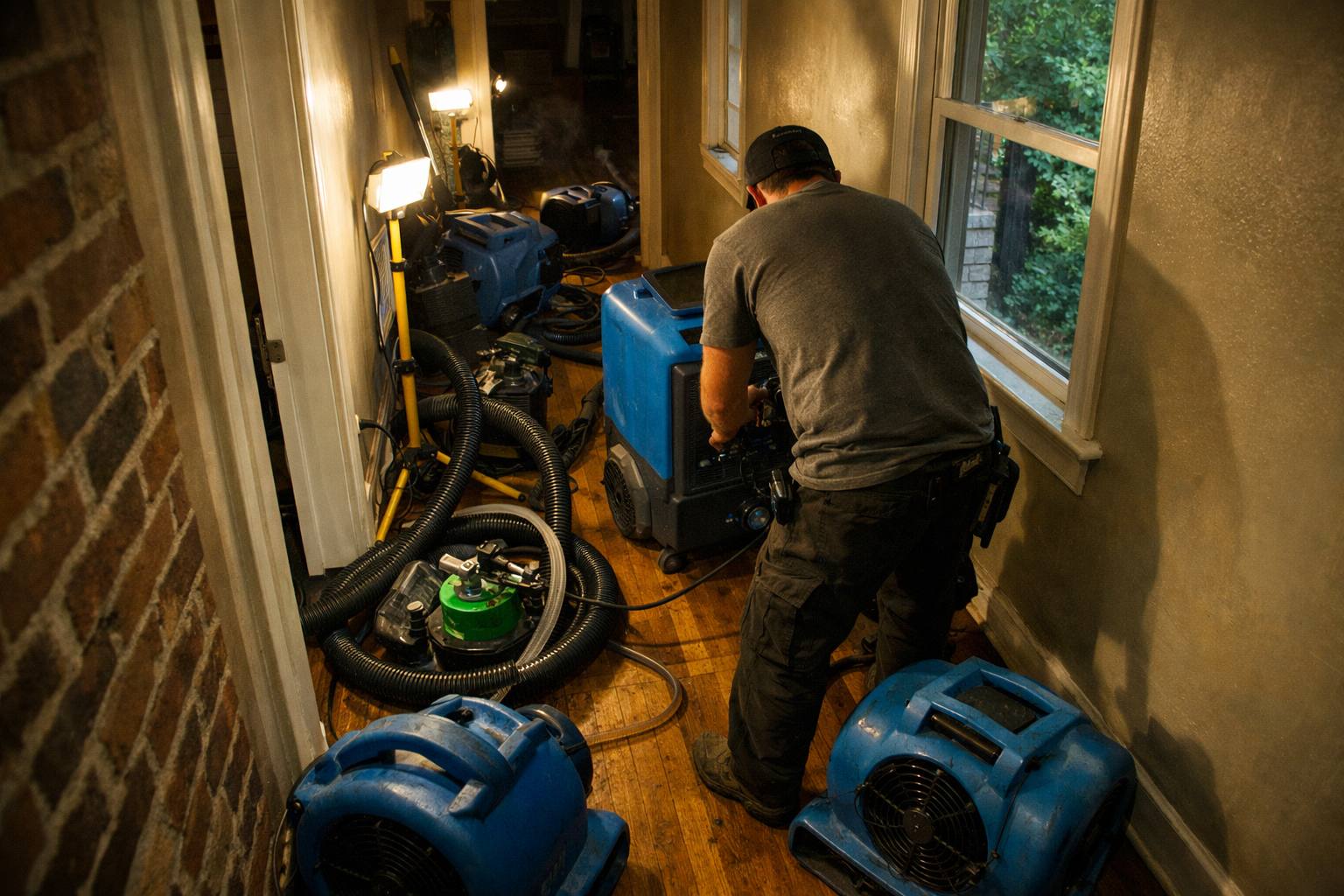
Emergency Water Removal in Decatur, GA
Emergency water removal is the rapid extraction of standing water using pumps and industrial vacuums to stop damage from spreading further into a property. It's usually the first step taken on-site, often within the first hour of a crew arriving. Call (678) 582-2476 now if you have active flooding. When water is actively pooling in a home or business, every minute matters. Emergency water removal focuses on one thing first: getting standing water out as fast as possible, before it soaks deeper into flooring, drywall, and furniture.
When Emergency Water Removal Is Needed
Common Situations That Call for Immediate Extraction
Emergency water removal is typically needed after burst or frozen pipes releasing large volumes of water, appliance failures like a washing machine or water heater, storm flooding entering a basement or ground floor, sump pump failure during heavy rain, or roof leaks allowing water to pool inside.
How the Process Works
On-Site Extraction and Source Control
Crews arrive with pumps, wet vacuums, and extraction tools sized for the amount of water involved. The immediate priority is removing standing water and addressing the source if it's still active. Once the bulk of the water is gone, the process shifts into drying and assessment.
Water Extraction: What Comes Out and How
Carpet, Hardwood and Tile Each Get a Different Tool
Water extraction is the part of emergency water removal that pulls water out of materials, not just off the floor. Carpet and pad get a weighted extraction wand or a ride-on extractor that presses water out of the pad before it can soak the subfloor. Hardwood gets surface extraction followed by drying mats that draw water up from between the boards. Tile and sealed floors are squeegeed and extracted at the grout lines and along the walls, where water hides under baseboard and cabinet toe kicks.
Why Extraction Comes Before Fans
Fans and dehumidifiers remove water a little at a time as vapor. Extraction removes it in bulk as liquid, which is far faster. Setting up air movers over a carpet that is still holding water only stretches the drying out and raises the humidity in the rest of the house. That is why the order on a Decatur job is always the same: stop the source, extract everything that will come out as liquid, then set drying equipment for what is left inside the walls and subfloor.
24-Hour Water Removal Around Decatur
Older Homes Near Downtown Decatur, Oakhurst and Winnona Park
Many houses in the older parts of the city were built before modern supply lines and sit on raised crawl spaces. A failed line under a bathroom or kitchen can run for hours before anyone notices, and the water ends up in the crawl space instead of on the floor. Night and weekend calls often start with a wet floor upstairs and finish with water removal underneath the house.
Lots That Drain Toward the Creeks
Streets that slope toward Shoal Creek, Peavine Creek and the other small creeks that cross DeKalb County carry a lot of storm runoff in a hard rain. When that water reaches a basement door, a window well or a garage slab, it arrives fast and it is not clean, so extraction comes with sanitizing and the contaminated materials are handled differently from a burst-pipe loss.
Apartments, Condos and Townhomes
In Decatur, Clarkston, Tucker and Avondale Estates, plenty of calls come from attached homes where water from one unit reaches the next. Water removal in those buildings starts in the unit with the source and follows the water through shared walls and ceilings so the neighbors are documented too.
Emergency Water Removal Questions
Is 24-Hour Water Removal Really Available at Night?
Yes. Calls to (678) 582-2476 are answered around the clock, and a crew is dispatched at night, on weekends and on holidays. You will be talked through shutting off the water and staying safe while the crew is on the way.
Can I Start Removing the Water Myself?
Moving valuables, mopping a small amount of clean water and shutting off the source are all helpful. Anything more than a small spill, water that came from outside or a sewer line, or water near outlets should be left for extraction equipment. A household wet vacuum cannot pull water out of pad and subfloor, and it is not built for contaminated water.
What Is the Difference Between Water Removal and Water Extraction?
People use both terms for the same emergency visit. Water removal usually means pumping out standing water. Water extraction usually means pulling water out of carpet, pad and other materials with extraction equipment. A real emergency visit includes both, then moves straight into drying.
Water Removal From Basements and Crawl Spaces
Basement Water Removal
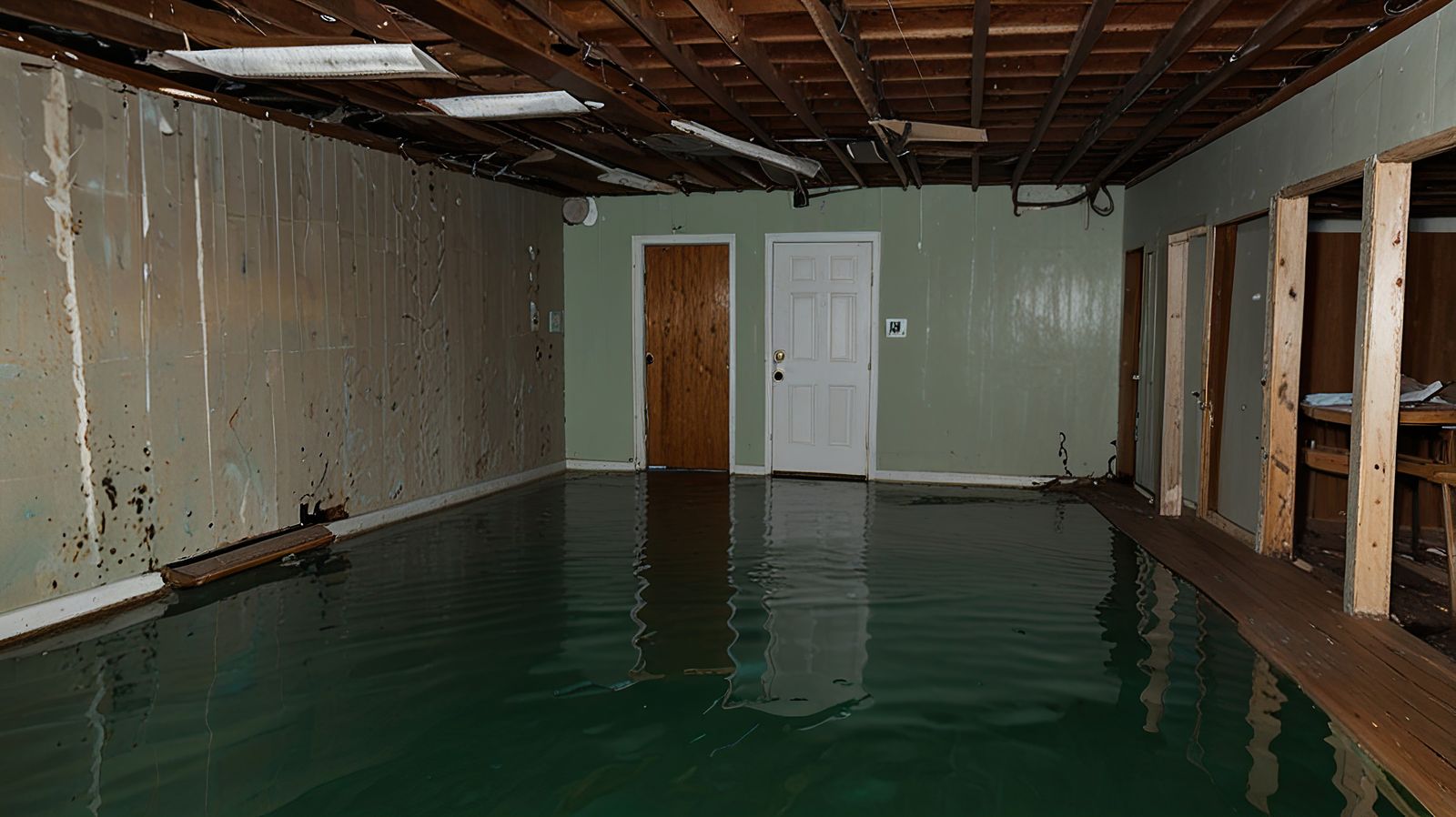
Basements in this part of DeKalb County take on water from sump pump failure, storm runoff pushing against foundation walls, and plumbing failures upstairs that drain downhill. Removal starts with pumping the water down in stages while the source is dealt with, then pulling out wet contents and flooring so the space can dry. Crews also check whether anything electrical sits in the water before work begins. The flooded basement cleanup service page covers the salvage and drying side of these jobs.
Crawl Space Water
Many Decatur homes sit on vented crawl spaces rather than slabs, and water that collects there is easy to miss because nobody walks through it. Extraction from a low, tight space uses small pumps and wet vacuums, and the insulation and vapor barrier are checked for saturation afterward. Left in place, trapped water feeds musty odors and can be the start of a mold problem under the floor.
What to Do While You Wait for the Crew
Safe First Steps
If the water is coming from a supply line, shut off the water at the main valve. Stay out of standing water if outlets, appliances, or cords are anywhere near it, and shut off power to the affected area at the panel only if you can reach the panel without stepping through water. Lift small valuables, rugs, and electronics onto dry surfaces, and photograph the damage before anything is moved so the insurance file starts with a clear record.
What Not to Do
Do not run a household vacuum on water, and do not use ceiling fixtures under a sagging, wet ceiling. Do not walk back through the room repeatedly, since that spreads moisture and contamination into dry areas. Leave pumping and extraction to the crew once they arrive.
Why Speed Matters
The First 24 to 48 Hours
Standing water causes damage on a timeline. Drywall and flooring begin absorbing water almost immediately, and the risk of mold increases significantly after the first 24 to 48 hours. Fast extraction is what limits a water event to a manageable repair instead of a much larger renovation project.
Serving Decatur and DeKalb County
Decatur and Nearby Communities
Emergency water removal is available across Decatur and surrounding communities including Doraville, Chamblee, and Stone Mountain.
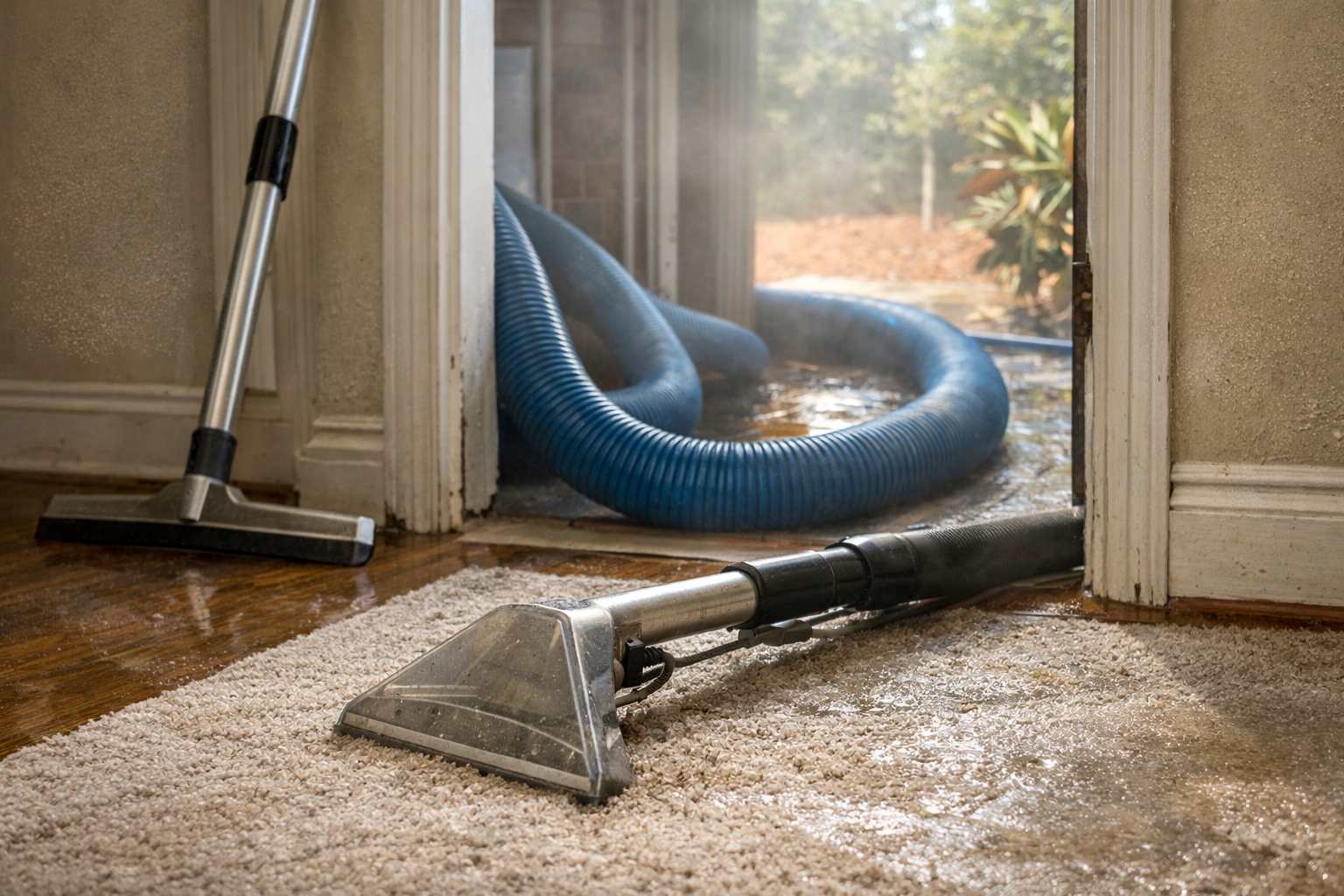
Water damage restoration in progress — Decatur, GA
If water is actively flooding your property, don't wait. Call (678) 582-2476 now.
24/7 emergency response · Free on-site damage assessment
📞 Call (678) 582-2476Get Emergency Help
No obligation · Available 24/7
Takes 60 seconds · No obligation
Related Articles
Why Choose Us?
- Licensed & Insured
- Locally Operated
- 24/7 Emergency Response
- Free Damage Assessment
- Insurance Documentation
- Industrial Drying Equipment